
Supporting them as loss happens
We all experience loss.
And we all respond to it differently.
For kids, loss can be especially confusing because they may not yet have the experience—or the words—to understand what they are feeling.
And loss doesn’t only mean death.
A friend moving away. A broken toy. Losing a game. Changing schools. A divorce. A new sibling. Moving to a new home. Losing a sense of safety or stability.
Some losses may seem small to us but feel very big to a child.
That matters.
Loss Is Personal
What feels like a “small” loss to one child may feel enormous to another.
Our job is not to decide how sad they should be.
Our job is to help them understand what they are feeling and learn how to move through it.
That means allowing space for sadness, anger, confusion, disappointment, or even moments when they seem completely fine.
Grief rarely follows the timeline we expect.
A child may seem okay and then react weeks later when something reminds them of the loss. A birthday, a holiday, a familiar place, or even an ordinary moment can bring those feelings back.
Sometimes the hardest part isn’t even the loss itself. It is what disappeared with it:
Safety. Trust. Routine. Control. Connection. Stability.
Those losses can be much harder for kids to name.
What Kids Need From Us
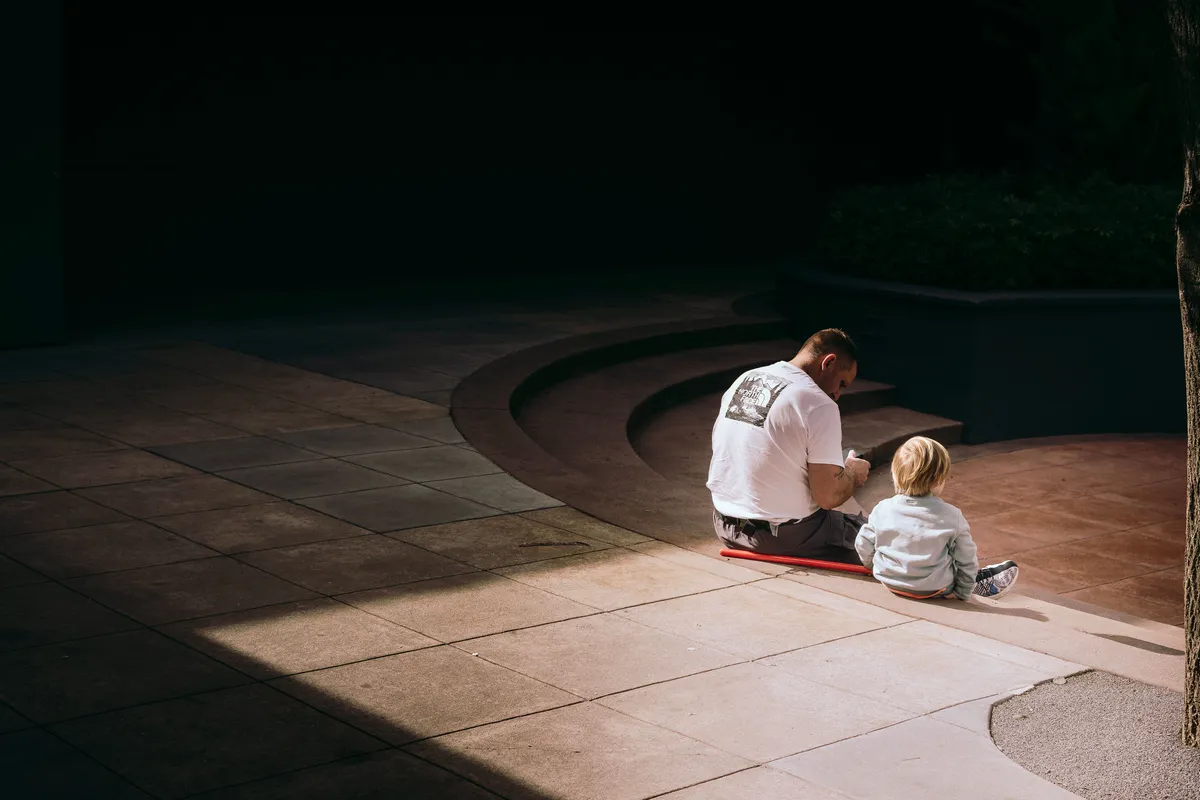
Mostly, they need our presence.
They need us to listen without immediately trying to make everything better.
They need to hear that their feelings make sense.
They need honest, age-appropriate answers.
And they need to see that adults can experience sadness and still continue moving forward.
A few things to remember:
Listen more than you fix. You don’t have to take the pain away to be helpful.
Let their reaction be theirs. They may grieve differently than you expect.
Be honest without overwhelming them. It is okay for children to see that you are sad too.
Keep routines when you can. Predictability can help restore a sense of safety.
Create ways to remember. A picture, letter, drawing, keepsake, or ritual can give grief somewhere to go.
Offer a little more connection. Ten extra minutes of focused attention can matter more than we realize.
One of the most important things we can teach children is that painful feelings do not have to be avoided or hurried away.
We can sit with sadness.
We can talk about hard things.
We can remember what mattered.
And eventually, we can begin moving forward while still carrying what we have lost.
Kids do not need us to make loss disappear. They need us to show them they do not have to experience it alone.